
How the Poway Residents Directory Works
No single public roll lists every person in Poway. The strongest route depends on the question you bring. PowGIS and the county assessor connect an address to its parcel and APN. The assessor also gives an owner clue and a mailing address. The recorder then ties a parcel or a party name to deeds. It also links to other recorded instruments. California's voter tool confirms a person's own registration only. A county voter file is restricted to approved uses. Court, business, license, vital, and history sources add still other forms of evidence.
These records describe roles, never one simple label. A deed party may be a buyer, seller, lender, trustee, or estate. A permit party may be an owner, designer, contractor, or applicant. The mailing address can point somewhere else entirely. A residents directory entry is tied to its publication date. It may omit a rural household. Treat each result as a lead. Then seek a second source held by the proper custodian.
- Start with PowGIS or ParcelQuest Lite when an address, road, or parcel clue is known.
- Separate situs, the physical parcel, from the owner mailing address.
- Use the ARCC index, a public kiosk, or a phone request to connect the parcel with recorded parties.
- Use the Court Index, bizfile, DCA, vital-record, or history route that matches the question.
- File a narrow California Public Records Act request for an existing city record that is not online.
Offices Behind the Poway Residents Directory
Poway incorporated on December 1, 1980. That date splits the record trail in two. City-created material after incorporation, such as City Clerk files, permits, business certificates, code records, and GIS, begins at City Hall. Land title and assessment stay county functions. Superior Court, vital records, elections, and custody records sit with county or state custodians. Earlier Poway election material follows the county route.
Poway City Clerk Carrie Gallagher is listed at City Hall, 13325 Civic Center Drive, Poway, California 92064, at 858-668-4535. The Clerk preserves permanent city records and accepts contact, visit, or online requests. County offices remain the right stop for title, ownership, and voter questions. The office cards keep those duties distinct.
San Diego County Recorder / Clerk
County service hub and public kiosks
San Diego County, CA
619-237-0502
San Diego County Assessor
Ownership and parcel information
San Diego County, CA
619-236-3771
Registrar of Voters
5600 Overland Avenue
San Diego, CA 92123
858-505-7260
Historical questions go to the County Archives. Its staff work from 10144 Mission Gorge Road in Santee and can be reached at archives@sdcounty.ca.gov. That channel differs from a broad city request. The archive holds county series while the Clerk keeps city files. The Poway open-government page names the Clerk as custodian. It links records, maps, and GIS data, and its public-records overview helps when a city file, not a county deed, is the target.
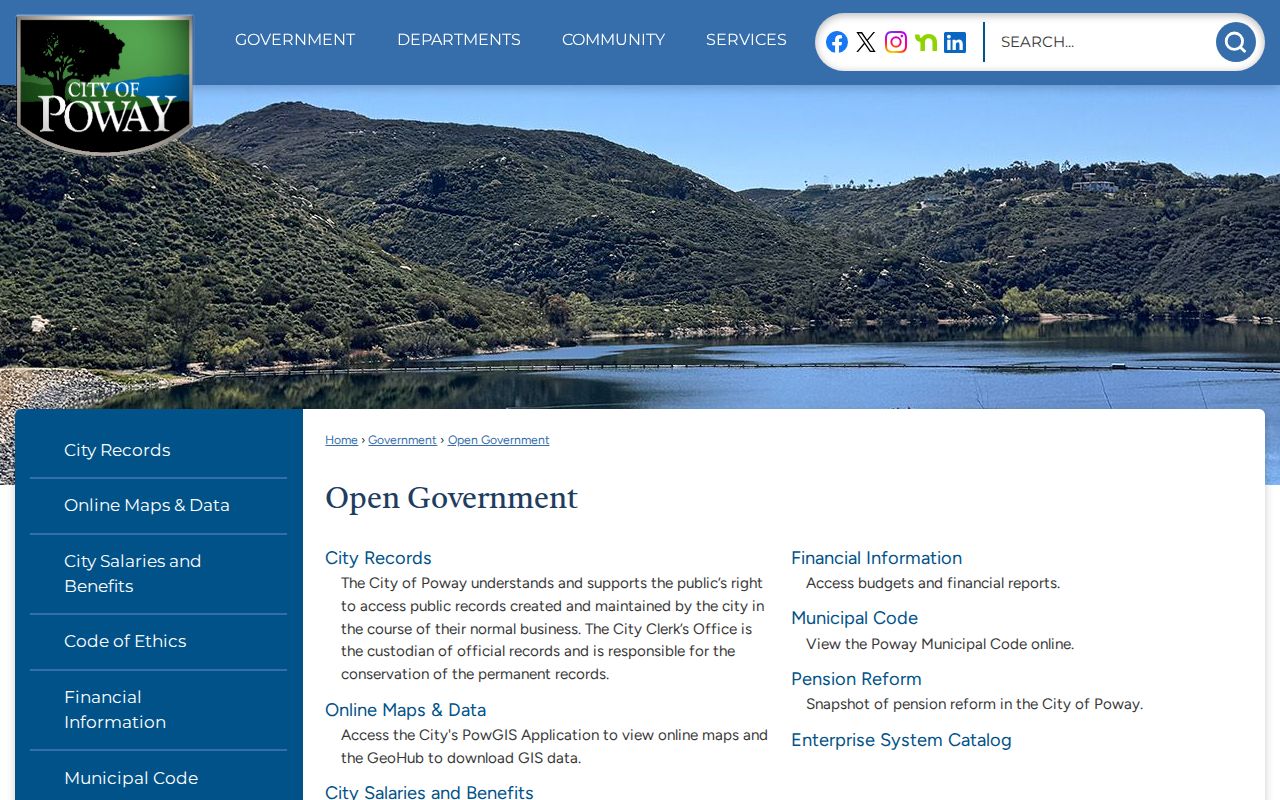
The City Clerk page shows the same routing split. A city request can reach city-created records, but it cannot replace an ARCC deed or a court file.
PowGIS Starts the Poway Trail
PowGIS earns the first stop when your clue is a street, parcel, owner name, road, intersection, or site address. Its common search accepts an owner, road name, parcel number, or street address. A result highlights the feature. It offers Zoom To and expands descriptive information. That carries you from a postal string to a parcel record without guessing at a household.
The advanced parcel query serves a short street segment well. Set Parcels as the selectable layer. Pick a field such as Owner Name, an operator such as Contains or is equal to, and a value, then use new, add, or remove. A point, line, polygon, rectangle, circle, current map window, or all-features selection can narrow the set further. Results may export as CSV or mailing labels. Call those outputs selected parcels or mailing addresses. They are not a complete resident list.
| PowGIS control | What it does |
|---|---|
| Site Address | Uses address autocomplete to find a physical parcel. |
| Search Field | Sets an advanced field, with Owner Name as the parcel default. |
| Operator and Value | Builds a clause such as Contains plus a road or name. |
| Map Select | Uses point, line, polygon, rectangle, circle, window, or all. |
| CSV and labels | Exports selected public descriptive results for careful review. |
Current Poway Residents Directory Sources
Current directory-style sources answer different questions. The assessor roll points to the owner of record and parcel data. The recorder index shows parties to recorded instruments. PowGIS supplies map and parcel context. My Voter Status covers the requester's own registration, not a third-party street browse, while a city staff directory lists public roles and a business or license search ties a person to a professional or commercial filing.
| Source | What it can show | Keeper | Access |
|---|---|---|---|
| PowGIS and ParcelQuest | APN, situs, owner clue, values, maps | City / Assessor | Free map; ParcelQuest allows 25 searches per 30 days |
| ARCC Official Records | Deed parties, dates, document details | Recorder | Web index, kiosks, copies |
| My Voter Status | Requester’s registration and election details | California SOS | Own-record verification |
| Superior Court Index | Case title, number, type, date, parties | San Diego Superior Court | Free index; file routes vary |
| Staff, business, and license search | Public role, entity, license status | City / SOS / DCA | Free online searches |
Keep the roles separate. Use the parcel and deed to establish land ownership, the permit to date work and identify project parties, and the court or vital route for the question it can legally answer. The Poway residents directory only holds its weight when each source answers its own question. No row proves everyone at an address.
| Route | Useful strength | Limit |
|---|---|---|
| Official custodian | Named office, record role, date, and correction path | Search fields, eligibility, and copy access can be restricted |
| Compiled commercial lead | May join public or licensed data into a quick clue | Stale, merged, or wrongly attributed results need primary-source review |
| Free public route | PowGIS, court index, state search, or library browse can start research | A free result is still limited to what that custodian publishes |
Specialized official searches stay narrow. The California Department of Corrections locator concerns state custody, while the State Controller's unclaimed-property search may surface an older owner, address, or business-affiliation clue. Neither works as a general Poway residents directory. Each result needs its own proof and its own lawful use.
San Diego County’s Poway Records
ARCC folds three offices into one. Assessor, recorder, and county clerk services all live behind a single county hub. Each desk answers a different slice of a Poway records question. The assessor's ParcelQuest Lite route returns APNs, property characteristics, assessed values, and maps. County disclosure rules allow 25 free searches across any 30-day stretch. Subscription tiers open up beyond that. Ownership and address details also move by phone. Public kiosks in county offices display ownership, values, maps, and the wider official-record image archive. The recorder index works by party, not by parcel. Fields cover Party Name with grantor, grantee, or all-party roles, plus Document Type, a recording date range, Document Number, and Book and Page. Search and Clear buttons round out the form. Once an instrument opens, it can name a grantor, grantee, requester, and return-mail addressee. It may also carry a legal description, transfer-tax declaration, signature, notary block, and recording stamp. Certified or plain copies only come through the official route. Start at the San Diego County Assessor/Recorder/County Clerk hub before picking a counter, phone, kiosk, or mail path. Scope matters here. A CPRA request filed with Poway cannot yield a county deed image. A recorder request will never answer a city permit question. The county's service boundary appears in this ARCC service reference image, which shows why one county hub routes so many record families.
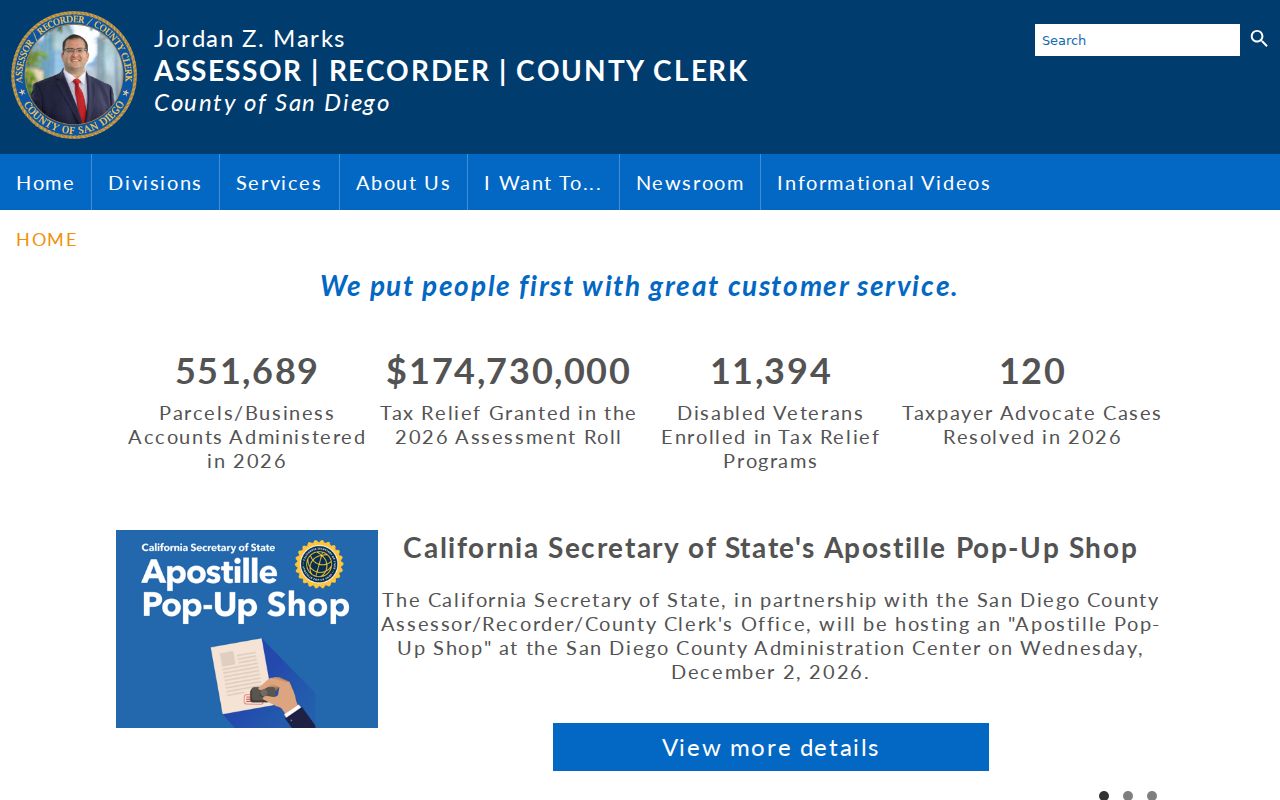
That service map earns its place. It nudges every searcher to name the record family first, before anything else. Doing so keeps a property question away from a court clerk. It also keeps a city request from being handled as a deed order.
The Poway APN Kiosk Change
Assembly Bill 1785 reshaped the parcel-to-deed workflow on December 9, 2024. ARCC switched off APN searching inside the web Official Record Search. APN queries still work at public kiosks in five county offices. Parcel indexing itself is untouched. The practical shift is now twofold. Pull the APN and legal description from PowGIS or ParcelQuest first. Then plan around a kiosk visit or a party-name search. For a street lead, write down the exact APN. Add the situs, legal description, any owner clue, and the mailing address, each on its own line. At the kiosk, let the APN bridge into recorded documents. Then widen the chain through grantor and grantee names. A visit is not the only route. The Recorder/Clerk phone line at 619-237-0502 handles document and copy routing. The Assessor line at 619-236-3771 takes ownership and address questions.
Practical check. A web search stopping at the APN field does not mean the deed trail is gone. Move the APN to an ARCC kiosk or use the recorded party and document fields.
From a Poway Name to a Parcel
A name by itself proves little. PowGIS does query by Owner Name, but one name can attach to several people. Layer in a middle name, a spouse, a business, an APN, a legal description, or a road. Situs and mailing addresses deserve a side-by-side look. Then pull a recent deed. Read its recording date. A homeowners' exemption may hint at qualifying owner-occupancy. Yet it never accounts for every resident or household member.
- Roll
- An assessor’s current property record, tied to a parcel and assessment data.
- Index
- A finding aid that points to a record, not necessarily the full document image.
- Parcel
- A mapped unit of land identified by an APN and legal description.
- Criss-cross directory
- A street-order directory that can connect a house number with a listed occupant when a verified regional volume exists.
Precise labels beat loose ones. Say "owner of record," "mailing addressee," "permit applicant," or "court party" as the conclusion each source supports. Calling every role a resident turns a good clue into a false claim.
What Poway Court Records Confirm
Poway has no municipal court of its own. City, civil, probate, family, mental-health, and criminal matters all route to San Diego Superior Court. The free Court Index opens three doors: Party Name Search, Case Number Search, and DA Number Search. A party search demands a last name, takes optional first and middle names, and, where offered, accepts date of birth, case type, case location, and filing-date limits. Case-number searching runs on type, location, and number. The modern shortcut merges the year with the eight-digit sequence and drops the hyphen. An index hit can display case title, case number, facility, case type, filed date, and parties. It stops there. No charge appears, and no disposition either. Juvenile, traffic or minor-offense, sealed, confidential, and pre-1974 matters face limits or full exclusion. Eligible post-2008 civil, small-claims, and probate images, along with some post-2015 family images, can be bought through Register of Actions. Criminal documents still require a counter or mail-copy route. The San Diego Superior Court search guide draws the line between an index and the official file. A docket is the court's running case record. Disposition is the outcome. Neither follows from a name hit alone.
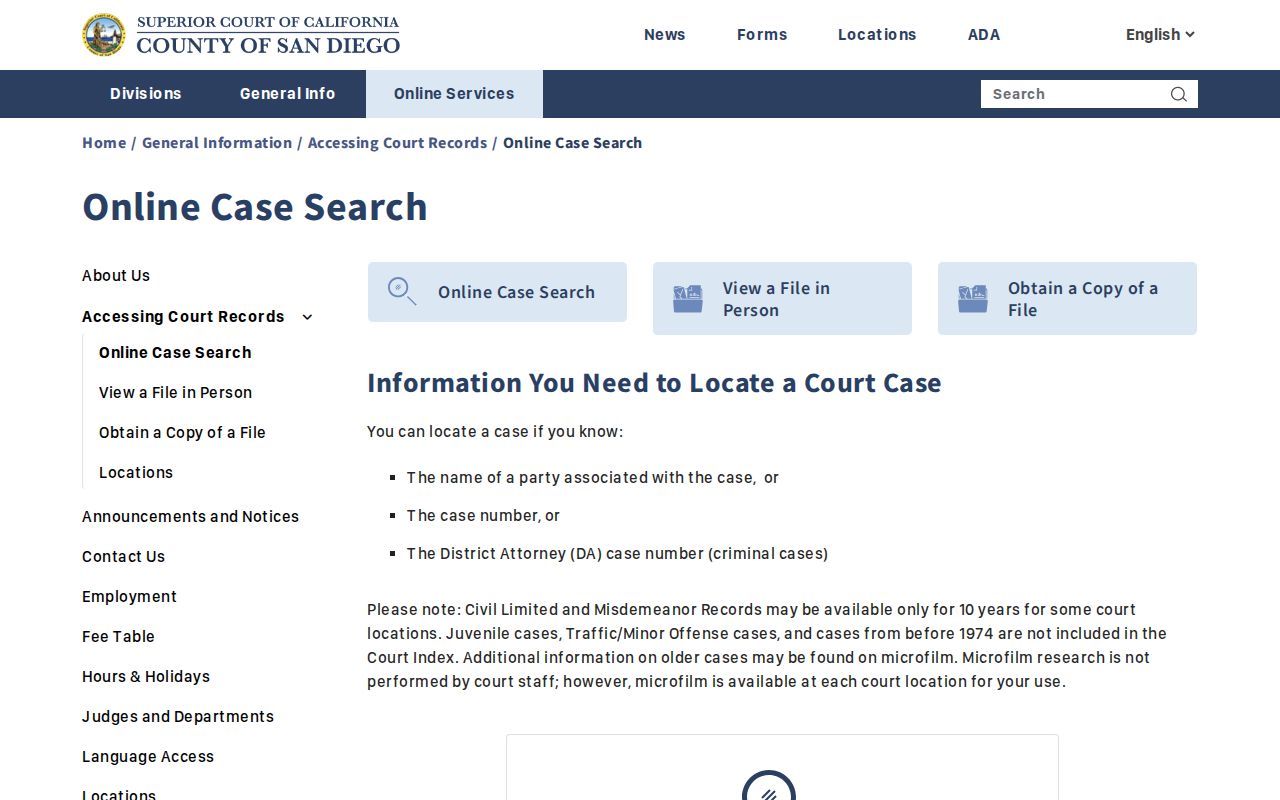
A court image belongs inside a verification chain. It cannot prove a person's current address or conduct. A clerk file, certified copy, or Register of Actions entry answers the narrower question worth asking.
Poway Voter Data Boundaries
California My Voter Status is an authenticated, own-record tool. It asks for a first and last name, California driver license or ID information, and date of birth. The result confirms registration status, party preference, address on file, precinct or district, and election information for that voter. It is not a third-party resident finder. No public street-by-street list exists behind it. Government Code section 7924.000 shields home street address, phone, email, precinct and registration identifiers, prior registration, license or ID numbers, Social Security information, and signature, subject to Elections Code section 2194 access. A Registrar of Voters data application demands an original signature, a detailed authorized purpose, a defined geographic or delivery scope, and a security plan. Email and fax submissions are refused. Commercial use is barred outright. The California My Voter Status tool is the source for the self-lookup view displayed below.
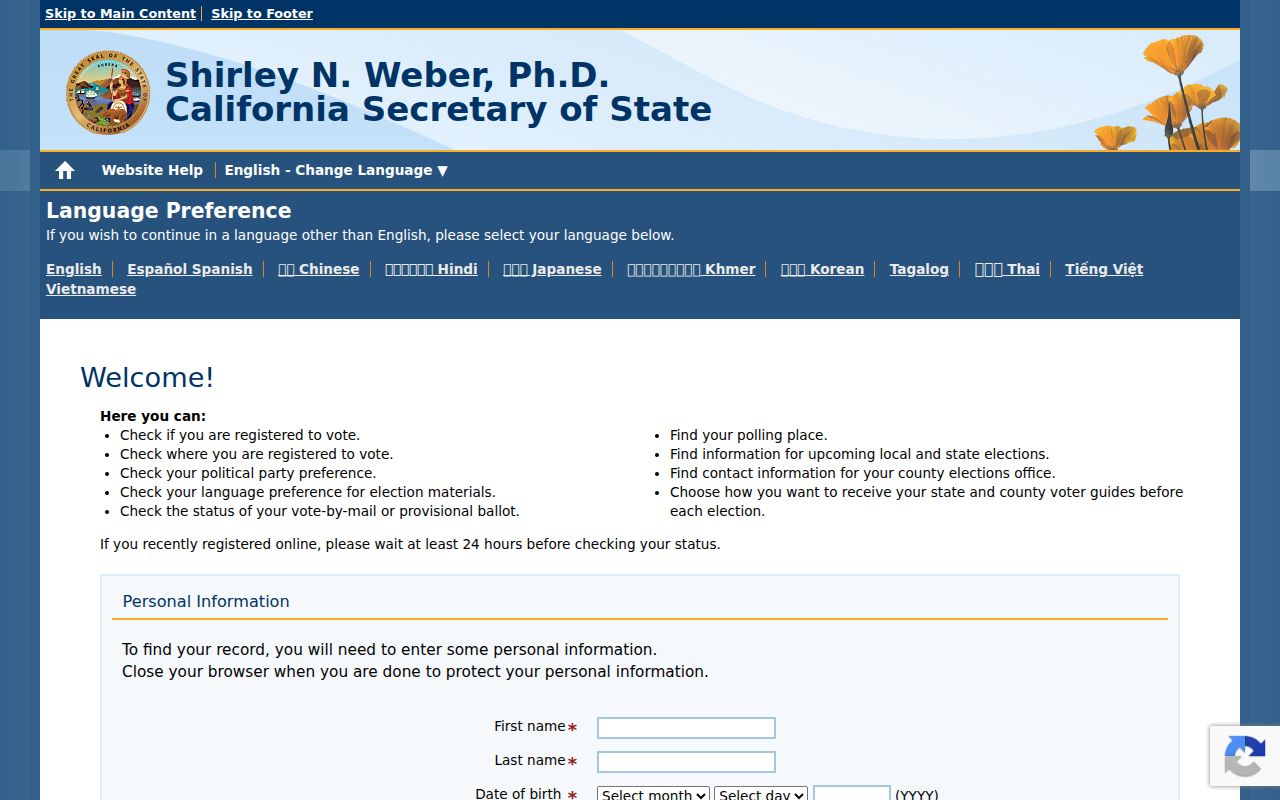
The self-lookup screen marks the lawful boundary in plain view. A voter may verify their own record, while an approved file recipient must honor the stated purpose and security rules.
Privacy limit. Public record access is not permission to stalk, harass, intimidate, or repeatedly contact someone. Use only lawful personal or approved civic research routes.
Poway City Hall Request Route
For identifiable city records that already exist, the City Clerk's online CPRA form is the fallback route. It collects a name, company, mailing details, phone, email, and a multiline description of what you want. You can attach a file and request an emailed copy. The city promises a status or determination notice within ten days. Paper duplication runs $0.10 per side, and postage plus copying fees are collected before anything is mailed out.
A strong request helps everyone. Name the department, the exact address or APN, the record type, and a rough date range. Existing permit files, business certificates, code records, GIS layers, and correspondence are all fair asks. Development Services handles Building Services at 858-668-4645, inspections at 858-668-4646, Code Compliance at 858-668-4660, and Planning at 858-668-4610 or 858-668-4659. Counter hours run Monday through Thursday 7:30 to 5:30 and Friday 8 to 5, with alternate-Friday closure. Building Services closes daily from 11:30 to 12:30.
The Poway public-records request form cannot demand a roster of everyone who lived at an address. Complaint identities and security-sensitive plans may be withheld or redacted. A permit party could be an owner, applicant, designer, or contractor, so read the names carefully before assuming who lived there.
Poway Business and License Trails
Business and license records can explain a public affiliation. They do not turn a business address into a home address. California bizfile searches work by name or file number. Drop the "C" from an entity number before searching. Advanced filters cover entity type or group, status, initial filing-date range, and publicly traded disclosure. Basic results default to 500 hits. Free PDFs can show entity name and number, type, status, formation date, and jurisdiction. They can also show principal and mailing addresses, agent, officers or managers, and filing history.
Poway adds its own local layer. The Business Certificate, Home Occupation Permit, and regulatory-license routes give city context. A city report search uses a search type, keyword, and date range. Home-occupation records may list applicant, business, home and mailing addresses, phones, email, own-or-rent choice, activity, equipment, and dwelling percentage. Redaction applies where required. A county fictitious business name record links a registrant and a business address. It does not prove current activity or residence.
The California bizfile search is the tool for tracing a business principal. The California DCA license search may show board, license type, number, status, issue or expiration, and address of record. It also offers discipline links.
The business-file image shows a public filing route. It is not a private household roster.
The California professional license search offers a separate public record route for a licensee's status and address of record.
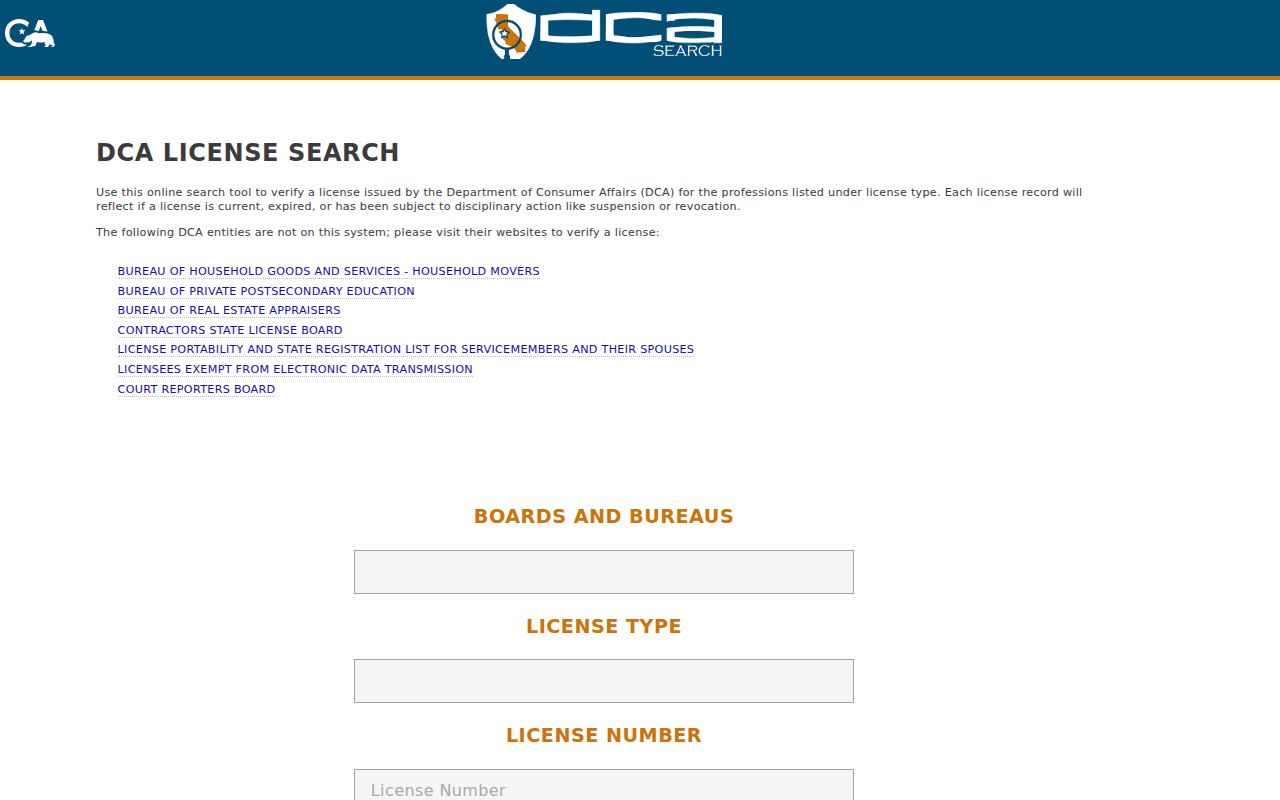
Label a license result as a professional record. When status matters, check with the relevant board before relying on it.
Historical Poway Residents Directory Trails
Poway's older directory story is regional, not a verified standalone long-running "Poway City Directory" series. The historical Poway residents directory trail was assembled from county and regional sources. Poway stayed rural and unincorporated until 1980. So look to San Diego City and County directories, Great Registers, newspaper indexes, assessor building records, deed books, vertical files, and oral histories. The official online catalogs publish no exact local publishers or year runs. Poway Library reference staff can confirm a title before a visit. The San Diego History Center can do the same.
Poway Library sits at 13137 Poway Road, Poway, California 92064, 858-513-2900. Its shared San Diego County Library catalog opens a route to photos, maps, documents, and oral histories. The Digital Collections offer another route. A regional directory entry may show a name, spouse, occupation, and residence address. It sometimes includes an owner or renter mark. A reverse section may arrange entries by house number and listed occupants. Pair a directory year with the 1930, 1940, or 1950 census. Then corroborate with newspaper, cemetery, vital, or probate evidence.
The Poway directory book page separates verified regional holdings from claims that still need a shelf check.
Poway Protected Address Gaps
Some missing names are lawful gaps. Safe at Home gives eligible survivors and threatened public workers a substitute mailing address. It also provides confidential voter registration. Participation does not erase older public records retroactively. The California Consumer Privacy Act and its amendments give covered consumers rights to know, delete, correct, and opt out of sale or sharing. Those rights are subject to exemptions. Broker suppression cannot rewrite a deed, court file, or assessor roll.
Public-record requests have limits too. The California Public Records Act, Government Code sections 7920.000 through 7931.000, generally requires an initial determination within ten calendar days. A possible fourteen-day extension applies for unusual circumstances. An agency need not create a record or answer an interrogatory. An exemption may cover one field, and reasonably segregable portions can still be released.
When a record is wrong, fix it at the source. Ask the Assessor about a parcel field. Ask the Recorder about indexing. The court clerk handles a case entry, the Registrar handles voter data, and ARCC/CDPH handles a vital certificate. A private compilation cannot correct the custodian's record.
Poway ZIP and City Geography
Poway runs on a single main street-delivery ZIP, 92064. City Hall and Poway Library both carry 92064 street addresses. City mail, though, travels through PO Box 789, Poway, California 92074-0789. That split makes 92074 a PO-box mailing ZIP. It is not evidence of a second residential neighborhood. USPS address lookup settles any question about a current delivery ZIP.
Postal wording never draws a legal boundary. A Poway mailing label can reach past the actual city line. It will not tell you which government holds a permit or parcel record. For that answer, turn to PowGIS, the city boundary map, council district, or county jurisdiction. The APN and legal description outlast any modern street string. Rural parcels, subdivisions, and pre-1980 county-era files depend on those older identifiers. The Census QuickFacts profile adds the population and household context behind the ZIP geography.
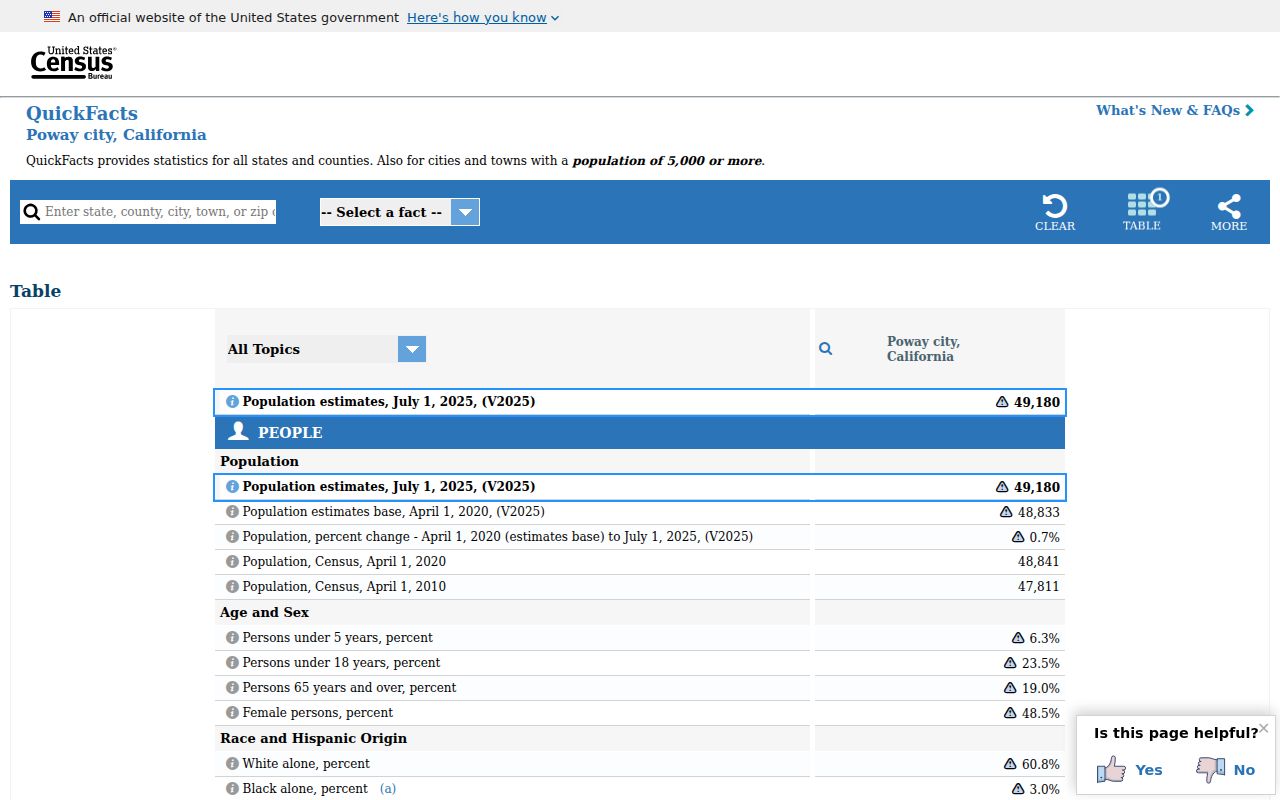
The official numbers explain why a one-ZIP city still rewards parcel-level checks in the Poway residents directory. Population scale alone never turns a postal code into a resident roll.
Records vocabulary. A situs address marks the physical spot. A mailing address takes the tax and agency letters. An APN is a tax-map locator, while a legal description fixes the land's true identity. A ZIP code routes mail, nothing more; it proves no city limit, no ownership, and no residency in the Poway residents directory.